Michael the Syrian was the patriarch of the Syriac (Jacobite) Orthodox Church from 1166-1199. He is famous among Medievalists for writing the 'World Chronicle', which is the longest extant chronicle written in the Syriac language. Covering the history of the world from creation to his own time, it is perhaps most useful for his unique insights into otherwise unknown aspects of Middle Eastern history--especially in the Medieval period.
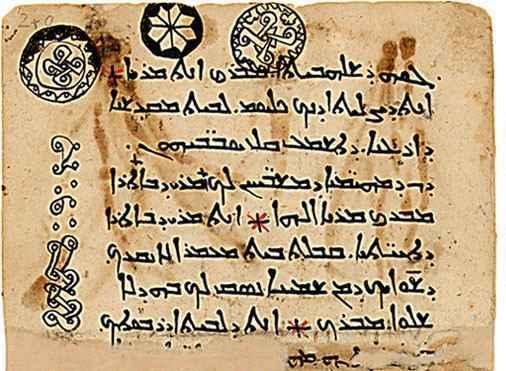
That said, I want to point to two passages in particular that shed light on aspects of the Crusader states, with which Michael was a contemporary. It is often said that the Catholic Europeans were intolerant and discriminatory toward their eastern cousins, many of whom were non-Chalcedonian Christians (ie, they adopted some form of a monophysite Christology). Many times, I am sure, they were. Michael, however, disagreed:
Additionally, he (surprisingly) praises the Templars and Hospitallers:
My intention in sharing these is not to argue that the Latin Crusader kingdoms were paradises of virtuous saints, but that as historians we need to approach the subject with a more nuanced perspective. Certainly there were many brutal warriors and leaders who committed grave acts for which the Crusading period is infamous. At the same time, however, the Crusades were a phenomena where people from diverse cultures, religions, and backgrounds converged together and lived in mutual admiration. Europeans settled in the Middle East, married, and had children. Occidentals transformed into Orientals.
That said, I want to point to two passages in particular that shed light on aspects of the Crusader states, with which Michael was a contemporary. It is often said that the Catholic Europeans were intolerant and discriminatory toward their eastern cousins, many of whom were non-Chalcedonian Christians (ie, they adopted some form of a monophysite Christology). Many times, I am sure, they were. Michael, however, disagreed:
"The pontiffs of our Jacobite church lived in the middle of them without being persecuted or molested. In Palestine, as in Syria, they never raised any difficulty on account of their faith, nor insisted on a single formula for all the peoples and all the languages of the Christians. But they considered as Christian everyone who venerated the cross without enquiry or cross-examination."
Additionally, he (surprisingly) praises the Templars and Hospitallers:
"When the Templars or Hospitallers have to occupy a military post, and hold it to the death, they die doing so. When a brother dies, they feed the poor on his behalf for forty days, and give lodgings to forty people. They consider those who die in combat as martyrs. They distribute to the poor a tenth part of their food and drink. Every time they bake bread in one of their houses, they reserve a tenth part for the poor. In spite of their great riches, they are charitable to all who venerate the cross. They founded everywhere hospitals, serving and helping strangers who had fallen sick."
My intention in sharing these is not to argue that the Latin Crusader kingdoms were paradises of virtuous saints, but that as historians we need to approach the subject with a more nuanced perspective. Certainly there were many brutal warriors and leaders who committed grave acts for which the Crusading period is infamous. At the same time, however, the Crusades were a phenomena where people from diverse cultures, religions, and backgrounds converged together and lived in mutual admiration. Europeans settled in the Middle East, married, and had children. Occidentals transformed into Orientals.

I'm reading. Fascinating stuff.
ReplyDelete